The DWP Cyber Incident: A Wake Up Call for UK Cybersecurity
The Department for Work and Pensions took nearly all of its online services offline after a serious cyber incident. Here is what happened, why it matters to every UK organisation and how 24/7 proactive zero trust security helps.
November 27, 2026 · 7 min read · By Ask AI Artificial Intelligence Integration
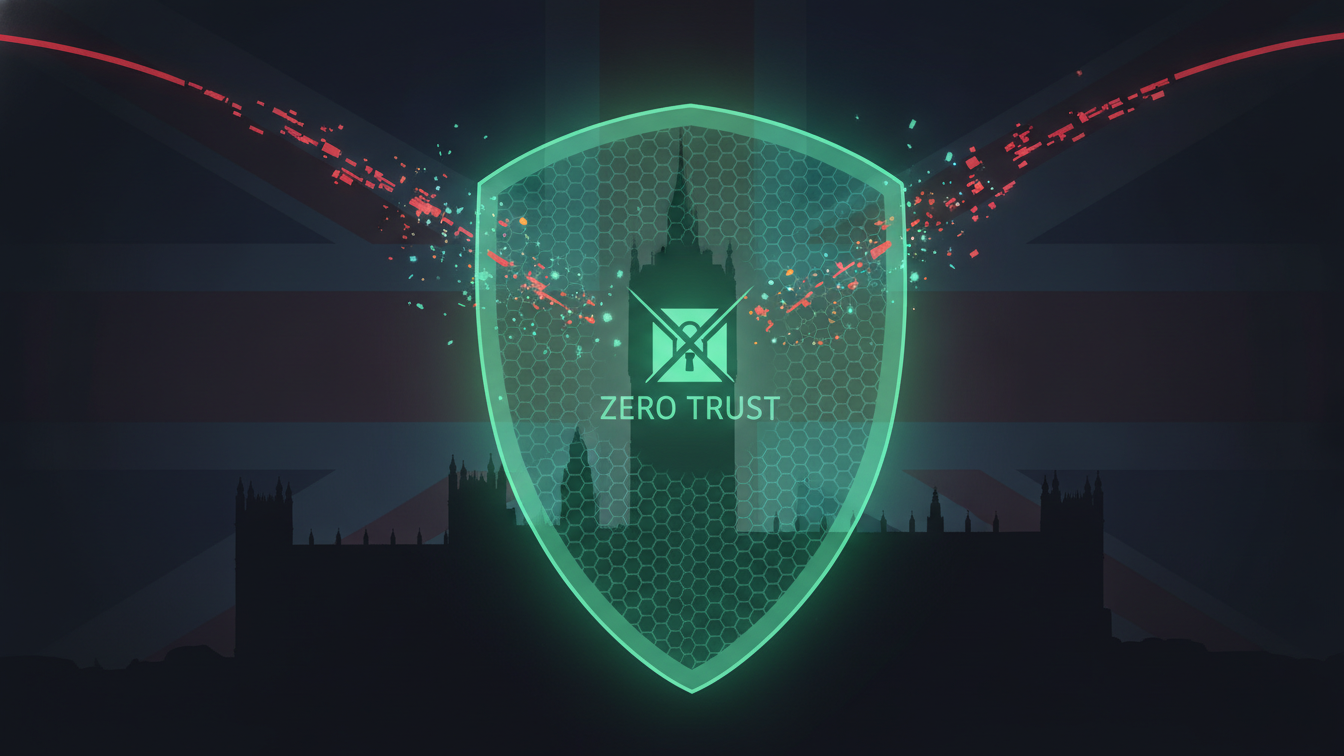
The DWP Cyber Incident: A Wake Up Call for UK Cybersecurity
Late on Thursday 26 November 2026, the Department for Work and Pensions (DWP) detected unusual activity on its systems. As a precaution, it took nearly all of its online services offline. By Friday morning, millions of people could not check their State Pension, apply for Personal Independence Payment (PIP), sign in to Universal Credit or use the Tell Us Once service that reports a death to government.
Work and Pensions Secretary Pat McFadden called it a "serious cyber incident". The DWP is working with the National Cyber Security Centre (NCSC) and the Government Cyber Coordination Centre to investigate and bring services back. The department says regular benefit and pension payments are not affected and will be paid as normal, and that claimants who cannot attend or update their circumstances will not be sanctioned.
Downing Street said there is currently no evidence that personal data has been lost or stolen, but it has not ruled out a cyber attack. The UK's former chief technology officer, David Knott, told BBC Newsnight his "strong suspicion" is that this was an attack. The Information Commissioner's Office is also in contact with the DWP.
The human impact was immediate. Claimants told the BBC about missing payments, cancelled appointments and being unable to fill in the online journal their benefits depend on, just weeks before Christmas. Dame Chi Onwurah, Chair of the Science and Technology Committee, said the disruption "should be a wake up call".
The DWP has reminded everyone that it will never ask for personal or bank details by text or email. Incidents like this are often followed by scam messages, so check anything suspicious with our AI Phishing Detector before you click.
Why This Matters to UK Businesses and Organisations
If one of the largest government departments in the country can be forced offline, any organisation can. The DWP processes around 2.5 million payments a day. Most UK businesses, charities, councils and schools have far smaller security teams and budgets.
The bigger lesson is about reactive security. Taking systems offline after unusual activity is the right emergency step, but it means the attacker or fault was already inside. Reactive security waits for something to go wrong and then responds. The risks are clear:
- Late detection: attackers often sit quietly inside a network for weeks before anyone notices
- Service downtime: pulling systems offline stops the damage but also stops your customers and staff
- Data loss: in the Co-op hack of 2025 services were taken offline as a precaution, yet the data of 6.5 million members had already been stolen
- Cost and trust: recovery, investigations, regulators and lost customers cost far more than prevention
Proactive security turns this around by finding weaknesses and suspicious behaviour before an attacker can use them. AI now makes that kind of always on protection possible for organisations of every size.
Cyberattacks Are Not Just a UK Problem
The DWP incident is the UK story, but it comes during a difficult month for cyber security worldwide. In the United States:
- Hackers breached the U.S. Air Force's Cloud One computing platform, according to Reuters, with Cyber Command called in to assess the damage
- The U.S. Department of Agriculture system that handles payments to farmers was reported breached, alongside the FBI's National Crime Information Center
- The U.S. Treasury's Financial Crimes Enforcement Network (FinCEN) took some systems offline after unauthorised access
- Third party platforms serving JPMorgan Chase were hit by a cyber attack that may have exposed customer names and emails
These examples show that attackers target public services, finance and critical systems wherever they are. For UK organisations, the message from the DWP is the one that matters most: prepare now, before it is your turn.
Why Businesses Need 24/7 Proactive Cybersecurity
Attackers do not work office hours. Many attacks start at night, at weekends or over holidays, when fewer people are watching. Proactive, 24/7 cybersecurity covers five areas:
- Continuous monitoring: logs, sign ins and network traffic are watched around the clock, so unusual activity is spotted in minutes, not weeks. AI Threat Detection sorts real danger from noise.
- Vulnerability detection: websites, servers and plugins are scanned for weak points before attackers find them. Try our PHP and WordPress Security scanner.
- Patching: known weaknesses are fixed quickly and tracked, because unpatched software is one of the most common ways in.
- Phishing defence: most attacks still begin with one email or text. The AI Phishing Detector checks senders, links and hidden instructions.
- Ransomware defence: early warning signs, tested backups and known fixes stop ransomware spreading. See our AI Ransomware Defence register.
Modern AI agents can carry out much of this work automatically, so small teams can defend like large ones.
Introducing HighSecurity.ai Zero Trust Security Command Centre
The HighSecurity.ai Zero Trust Security Command Centre is our answer to reactive security. It is built by Ask AI Artificial Intelligence Integration on a simple principle: never trust, always verify.
Dormant by default. The Command Centre stays dormant by default. It watches and verifies, but it does not take aggressive action on a hunch. This avoids false alarms that lock out real users or take healthy services offline.
Combat only when verified. When a threat is confirmed, the Command Centre switches to combat mode. Only verified threats trigger action, such as quarantining a suspicious task, blocking a malicious request or revoking access, while everything else keeps working.
Security agents. HighSecurity.ai is a team of security agents built on the latest large language models from Anthropic, OpenAI and Google. They stand guard 24/7 and:
- Check every user, device and tool call before it is allowed through
- Watch for prompt injection, rogue agents and malicious requests
- Classify logs and alerts so critical warnings are never ignored
- Scan for vulnerabilities and track known attacks and their fixes
- Report suspicious behaviour to the Command Centre for verification
Every agent follows our governance framework, and no agent can go around it or grant itself extra permissions. Read more on our AI Security page.
Why Zero Trust and Active AI Defence Matter
Traditional security assumes that anything inside the network can be trusted. Once an attacker gets in, they can move around freely. Zero trust removes that assumption. Combined with active artificial intelligence defence, it brings clear benefits:
- Smaller blast radius: a single stolen password or device cannot unlock everything
- Faster response: threats are spotted and contained in minutes, around the clock
- Less downtime: only the affected part is isolated, so the rest of your service keeps running
- Fewer false alarms: dormant by default and combat only when verified means action is based on evidence
- Stronger compliance: verified access and clear logs support UK GDPR and NCSC guidance
We want to be clear and honest: no security system can guarantee 100% protection. New weaknesses are found every day, and determined attackers keep changing their methods. What zero trust and active AI defence do is greatly reduce the chance of a successful attack and limit the damage if one happens. They work best alongside regular backups, staff training and a tested incident response plan.
The DWP cyber incident is a reminder that every UK organisation needs to act before an attack, not after it. Explore the Zero Trust Command Centre or browse every security tool in our AI Agents Directory.
Sources: GOV.UK DWP statement, BBC News, The Guardian, The Independent, UK Parliament Science and Technology Committee, Reuters, NBC News and Politico, 20 to 27 November 2026. This is a live incident and details may change.
Frequently asked questions
What happened at the DWP?
Late on Thursday 26 November 2026 the Department for Work and Pensions detected unusual activity and took nearly all of its online services offline as a precaution. Universal Credit, State Pension, PIP applications and Tell Us Once were unavailable on Friday 27 November while the National Cyber Security Centre investigated.
Are DWP benefit and pension payments affected?
The DWP says regular benefit and pension payments are not affected and will be paid as normal. Claimants who cannot attend or update their circumstances during the incident will not be sanctioned. Anyone with a problem should call their usual benefit line.
Was personal data stolen in the DWP cyber incident?
Downing Street said there is currently no evidence that personal data has been lost or stolen, but the investigation is ongoing and a cyber attack has not been ruled out.
What is zero trust security?
Zero trust means never trust, always verify. Every user, device and request must prove who it is and what it is allowed to do, every time, instead of being trusted because it is already inside the network.
Can any security system guarantee 100% protection?
No. No security system can guarantee complete protection. Proactive monitoring, fast patching and zero trust controls greatly reduce the risk and the damage of an attack, but they work best alongside good backups, staff training and an incident response plan.
Topics
Explore ArtificialIntelligence.com.ai
Find the AI tools, companies and domains you need
Browse our verified directory of 125+ AI professionals, tools, and premium .ai domains — all in one place.